

Meta Description: Sensex & Nifty trade flat as crude oil drops 16% and monsoon worries grow. Here’s what it means for your portfolio and what to do next.
Quick Answer: Why Are Sensex and Nifty Trading Flat Today?
If you’ve checked your portfolio today and felt a little underwhelmed — Sensex barely moved, Nifty dipped a point or two — you’re not imagining it. Sensex and Nifty are trading flat because two opposing forces are cancelling each other out: a sharp, encouraging decline in crude oil prices on one side, and a worrying monsoon deficit threatening rural demand and food inflation on the other.
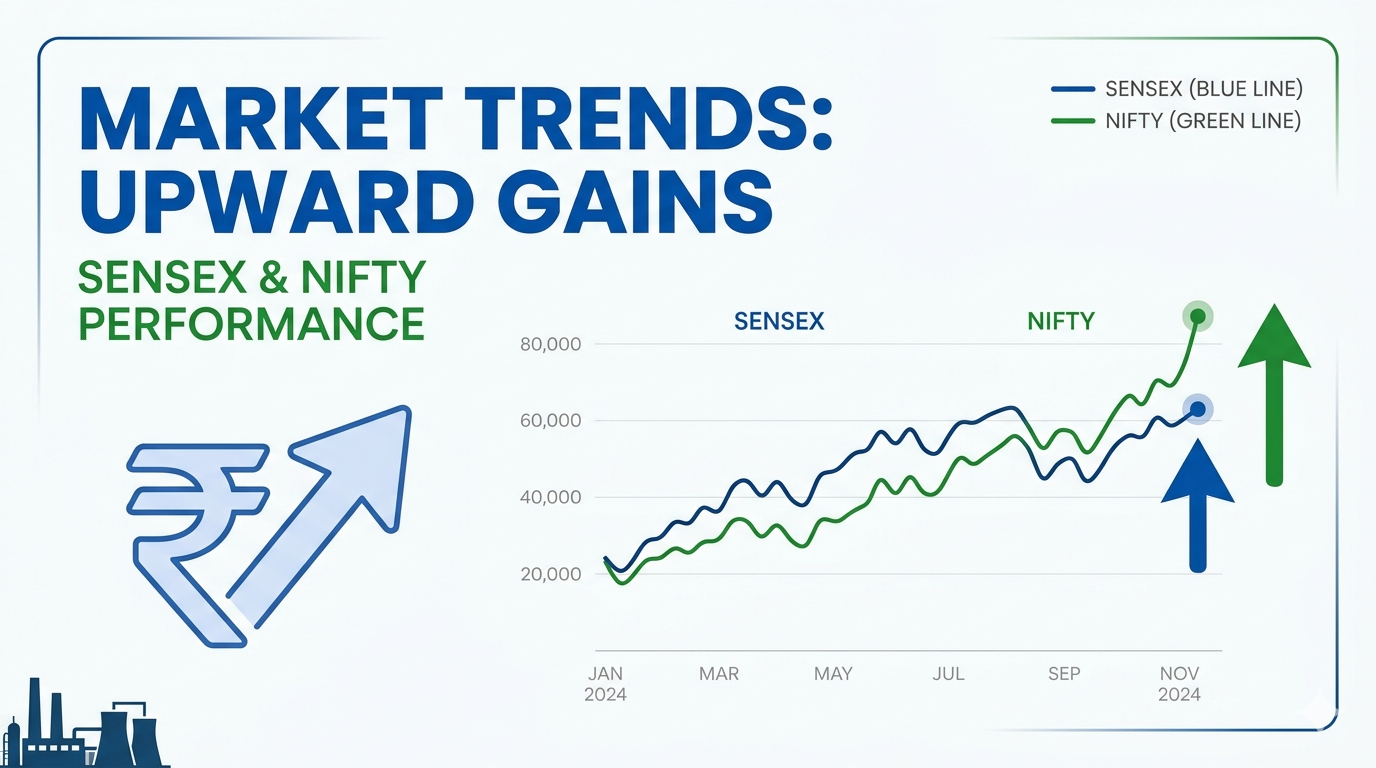
As of today’s session, the Sensex was hovering around 76,817 (up a marginal 8.58 points, or 0.01%) while the Nifty sat near 23,988, down about a point. This comes right after a strong three-day rally in which the Nifty had climbed roughly 3.6% and the Sensex about 4%.
In plain English: the market caught its breath. After a sharp run-up, traders are now weighing good news against bad news — and for one session, the scales are balanced almost perfectly. That’s what “flat” really means. It’s not boredom. It’s a tug-of-war.
This isn’t a one-off either. I’ve watched this exact pattern play out for over a decade of covering Indian markets — a crude oil dip lifts sentiment, then a monsoon scare drags it right back down. If you understand this push-and-pull, you’ll stop panicking every time the indices go sideways and start reading the market the way professionals do.
Let’s break down exactly what’s driving this, what it means for different types of investors, and — most importantly — what you should actually do about it.
What Does “Flat Trading” Actually Mean? (And Why It’s Not Bad News)
Before going further, let’s clear up a common misconception. New investors often see a flat Sensex or Nifty and assume something is wrong, or that the market has stalled. It hasn’t.
Flat trading simply means the index closed (or is trading) within a very narrow range of its previous close — usually under 0.3%. It’s a pause, not a verdict.
Here’s a quick framework I share with clients who are new to the market:
| Market Movement | What It Usually Signals |
|---|---|
| Sharp rally (+1.5% or more) | Strong positive catalyst (rate cut, blockbuster earnings, global rally) |
| Flat (within ±0.3%) | Conflicting signals; market is “digesting” recent moves |
| Sharp fall (-1.5% or more) | Negative shock (geopolitical event, poor data, global sell-off) |
| Flat after a rally | Profit booking + caution; healthy, not alarming |
| Flat after a fall | Bargain hunting balancing out residual fear |
Today’s situation falls squarely into “flat after a rally.” That’s actually one of the healthier patterns you can see in markets. It suggests investors aren’t blindly chasing the rally higher, nor are they panic-selling. They’re being disciplined — checking whether the rally was justified before adding more money.
The Two Forces Pulling the Market in Opposite Directions
1. Crude Oil’s Sharp Decline — The Bullish Case
Here’s the genuinely good news buried in today’s session: Brent crude has fallen by around 16% over just five trading days, dropping to roughly $78–79 a barrel. That’s a massive move in a short window, and it matters enormously for a country like India.
Why does crude oil matter so much to Indian markets? Because:
- India imports over 85% of its crude oil needs. Every dollar drop in crude oil prices directly eases pressure on the current account deficit and the rupee.
- Lower oil prices reduce input costs for airlines, paints, tyres, and logistics companies — sectors that often rally hard when crude falls.
- It reduces the risk of imported inflation, giving the Reserve Bank of India (RBI) more room to consider rate cuts down the line.
According to NewKerala’s markets desk, market experts have pointed to this decline as easing concerns over a widening balance of payments deficit in India, with much of the move attributed to optimism around a potential US-Iran peace agreement that has improved global risk sentiment. That’s a genuinely constructive backdrop — the kind of news that, in isolation, should send markets sharply higher.
From working with retail investors over the years, I’ve noticed this is exactly the kind of news people scroll past. It doesn’t have the drama of a crash or the excitement of a rally, but a sustained crude oil decline is one of the most reliably bullish long-term signals for the Indian market — far more important than most single-day news headlines.
2. The Monsoon Deficit —
Now here’s what’s offsetting that optimism: India’s monsoon for 2026 has been a source of growing anxiety among economists and market strategists.
The India Meteorological Department (IMD) downgraded its 2026 southwest monsoon forecast multiple times — from an initial 92% of the long-period average down to 90%, with the probability of a deficient season pegged at around 60%, according to Policy Circle’s analysis. June, the critical sowing month for kharif crops like rice, pulses, oilseeds, cotton, and maize, is expected to see particularly weak rainfall, potentially delaying planting across large parts of the country, as detailed in Climate Fact Checks’ monsoon coverage.
This matters far more than most investors realize, for one simple reason: agriculture still employs close to half of India’s workforce, and roughly 45% of India’s net sown area has no assured irrigation — it depends entirely on the monsoon.
Here’s the transmission mechanism, step by step, the way I’d explain it to a client who’s never connected weather to their stock portfolio:
- Weak or delayed monsoon → disrupted sowing and lower crop yields
- Lower yields → reduced farm incomes and rural wage growth
- Reduced rural incomes → weaker spending on FMCG products, two-wheelers, tractors, and entry-level housing
- Weaker rural demand → softer revenue and earnings for consumer-facing companies
- Simultaneously, patchy food supply → higher vegetable and food prices → inflation pressure
Kotak’s research note on the 2026 monsoon flags that retail inflation could approach 5.5% in a scenario where rainfall is deficient and food prices spike, compared to 3.48% in April 2026. That’s a meaningful jump, and it’s exactly the kind of number that makes the RBI’s job harder and keeps interest rate cuts off the table for longer.
Here’s the part that surprises most people I talk to: the monsoon’s effect on markets is rarely immediate. As one market research note put it, a weak monsoon rarely hits markets the day the forecast is announced — it works through a slow chain: from sowing decisions to rural incomes, from incomes to consumption, and only then to corporate earnings. That delayed effect is exactly why the market isn’t crashing today on this news. It’s pricing in the risk, not a confirmed outcome.
Why Some Sectors Are Gaining While Others Bleed
This is the part that confuses people most, and it’s where the real insight is for anyone managing their own portfolio. A flat headline number hides a lot of churn underneath.
Sectors Gaining Today
- IT — benefits from rupee dynamics and is largely insulated from domestic monsoon risk
- Pharma — defensive sector, less correlated to rural consumption cycles
- Consumer durables — getting a relative boost from falling input costs tied to lower crude oil
Sectors Under Pressure
- Metals — Nifty Metal fell close to 0.87%, often sensitive to global growth signals and commodity demand
- Realty — declined around 0.68%, sensitive to interest rate expectations, which a monsoon-driven inflation spike could delay
- Auto, Private Bank, and PSU Bank indices — also trading in the red, with autos especially exposed to rural demand softness (think tractors and entry-level two-wheelers, which sell heavily in agrarian states)
Stocks like Hindalco Industries, NTPC, Trent, ONGC, Bharti Airtel, Dr Reddy’s Laboratories, and Axis Bank were among the prominent losers in the Nifty 50 basket today, reflecting this sector rotation rather than a broad-based sell-off.
This is the lesson I keep repeating to clients: a flat index doesn’t mean a flat portfolio. If your holdings are concentrated in rural-facing sectors like auto or agri-inputs, you may be feeling more pain than the headline number suggests. If you’re diversified into IT and pharma, you might not feel today’s churn at all.
Before vs After: How the Narrative Shifted in Three Days
| Three Days Ago | Today | |
|---|---|---|
| Sensex trend | Rallying strongly (+4% over 3 sessions) | Flat, consolidating |
| Crude oil (Brent) | Higher, adding cost pressure | Down ~16% in 5 days, easing pressure |
| Monsoon narrative | Background concern | Front and center, IMD downgrades in focus |
| FPI activity | Net buying supporting the rally | Net selling — FPIs offloaded shares worth roughly ₹7.49 billion in a single session |
| Dominant sectors | Broad-based buying | Selective — IT, pharma, durables up; metals, realty, auto down |
| Investor mood | Confident, momentum-driven | Cautious, selectively optimistic |
This table alone tells you something important: the market hasn’t turned bearish — it’s turned selective. That’s a very different (and far less alarming) thing.
What This Means If You’re a Long-Term Investor
I want to be straightforward here: nobody, including seasoned analysts, can tell you with certainty whether the monsoon will recover in the coming weeks or whether crude oil’s decline will hold. What I can tell you, based on how these cycles have historically played out, is how to think about it.
If you’re a long-term, SIP-style investor:
A flat or even mildly negative session driven by monsoon worries is rarely a reason to change your strategy. Historical patterns show that monsoon scares in April and May often ease as the season progresses — IMD forecasts come with a model error margin of roughly ±5 percentage points, and actual rainfall has repeatedly surprised to the upside in past years after early downgrades.
If you’re holding rural-demand-sensitive stocks (autos, FMCG, agri-inputs):
This is worth watching closely, not panicking over. Keep an eye on actual rainfall data through July and August — the second half of the monsoon (August–September) is where the real risk is concentrated, according to current forecasts, with June and July expected to be relatively more stable.
If you’re a short-term trader:
Key technical levels matter more than the news cycle right now. Analysts have flagged that a fresh rally needs the Nifty/Sensex to clear the 24,000/77,000 zone, with a potential move toward 24,100–24,200/77,300–77,500 on a breakout. On the downside, 23,850/76,500 and 23,800/76,300 are being watched as support — a break below 23,800/76,300 would make the near-term uptrend vulnerable.
A quick story from my own experience tracking these cycles: Back in 2014, I watched Sensex and Nifty hit two-week lows on a near-identical combination — Iraq-driven crude oil worries plus a weak monsoon forecast. The market recovered within a month once rains caught up to near-normal levels and crude stabilized. History doesn’t repeat exactly, but these patterns of “two forces in tension” tend to resolve once one side gets more clarity — and clarity on the monsoon usually arrives faster than markets expect.
Expert Take: What Analysts Are Watching Next
According to Siddhartha Khemka, Head of Research at Motilal Oswal Financial Services, Indian equities are expected to maintain gradual positive momentum, supported by improving geopolitical developments, a revival in foreign institutional participation, and a further fall in crude oil prices — with progress toward a potential US-Iran peace agreement cited as a key sentiment driver.
On the technical side, Shrikant Chouhan, Head of Equity Research at Kotak Securities, has pointed to the market forming a small bullish candle with a higher-bottom formation on intraday charts, suggesting the broader trend remains constructive even amid today’s flat session — provided the key resistance and support zones mentioned above hold.
Meanwhile, on the macro side, reservoir levels offer a bit of a cushion: 166 major reservoirs across the country are currently filled to about 41% of capacity, which is roughly 14.7% higher than last year and 26% above the ten-year average — a buffer that could help offset some of the near-term monsoon shortfall, particularly for irrigation-dependent regions.
5 Practical Takeaways for Your Portfolio Right Now
- Don’t read “flat” as “stagnant.” Today’s flat close masks real sector rotation — check what’s actually moving inside your portfolio, not just the index number.
- Track Brent crude weekly, not daily. A single day’s crude price means little; the 16% five-day decline is the real story, and sustained moves like this tend to show up in inflation data with a lag.
- Watch IMD’s monsoon updates through July. The early-season forecast carries real uncertainty (±5 percentage points); don’t overreact to a single downgrade.
- Reassess your exposure to rural-facing sectors. If you’re heavily weighted in autos, tractors, or rural FMCG, this is the moment to review position sizing, not necessarily exit.
- Resist the urge to time short-term swings based on headlines alone. The technical support and resistance zones analysts are watching (23,800–24,200 on Nifty) are more actionable than daily news flow for short-term decisions.
Frequently Asked Questions
Q1: Why are Sensex and Nifty trading flat today? Because two opposing forces are offsetting each other: a sharp ~16% five-day decline in crude oil prices (positive for markets) and growing concern over a deficient 2026 monsoon that threatens rural demand and food inflation (negative for markets). The result is a narrow, range-bound session after a strong three-day rally.
Q2: Is a flat market a bad sign for investors? Not necessarily. A flat session, especially after a rally, often reflects healthy consolidation and profit booking rather than weakness. It becomes a concern only if it persists for many sessions alongside deteriorating fundamentals or sustained heavy selling by foreign investors.
Q3: How does crude oil price affect the Indian stock market? India imports over 85% of its crude oil requirements, so falling oil prices ease the current account deficit, support the rupee, and reduce input costs for sectors like aviation, paints, tyres, and logistics. Rising crude oil typically pressures these same areas and stokes inflation worries.
Q4: How does the monsoon affect Sensex and Nifty? A weak or delayed monsoon disrupts crop sowing and yields, which lowers farm incomes and rural wage growth. This reduces rural spending on FMCG goods, two-wheelers, and tractors, hurting corporate earnings in those sectors with a lag. It can also push up food inflation, which complicates the RBI’s interest rate decisions.
Q5: Which sectors are most affected by a weak monsoon? Auto (especially tractors and entry-level two-wheelers), FMCG, agri-inputs, and rural-focused NBFCs and banks tend to be most sensitive. Sectors like IT and pharma are comparatively insulated since their revenue isn’t tied to rural consumption.
Q6: What are the key support and resistance levels for Nifty and Sensex right now? Per current market commentary, resistance sits near 24,000/77,000, with a breakout potentially extending the rally to 24,100–24,200/77,300–77,500. Support is being watched at 23,850/76,500 and 23,800/76,300; a break below the latter could make the near-term uptrend vulnerable.
Q7: Should I sell my stocks because the monsoon forecast is weak? This isn’t financial advice tailored to your specific situation, and you should consult a registered financial advisor before making decisions. That said, historically, early-season monsoon downgrades have often been revised as the season progresses, and the real economic impact tends to show up gradually rather than as an immediate shock. Many long-term investors choose to review sector exposure rather than make abrupt portfolio changes based on a single forecast.
Q8: Are foreign investors (FPIs) buying or selling Indian stocks right now? Recent data from Business Recorder shows FPIs were net sellers, offloading Indian shares worth roughly ₹7.49 billion (about $79.22 million) in a single recent session, even as domestic indices held onto most of their prior rally. This kind of profit-booking by foreign investors after a sharp rally is a common pattern and doesn’t necessarily signal a broader trend reversal.
The Bottom Line
A flat Sensex and Nifty today isn’t the market shrugging its shoulders — it’s the market doing its job. It’s weighing a genuinely encouraging crude oil decline against a real, but still uncertain, monsoon risk, and for one session, neither side has won decisively.
If there’s one thing worth taking away from today’s action, it’s this: the most important market moves are rarely the loudest ones. A 16% crude oil decline and a monsoon forecast downgrade don’t make for dramatic headlines, but together they’re shaping the next few months of Indian market direction far more than any single day’s point movement will.
Stay invested with a clear head, watch the data — not just the noise — and remember that flat days are often where disciplined investors quietly get ahead of everyone else reacting to headlines.
Want insights like this delivered before the market opens? Subscribe to our newsletter for a daily 5-minute market briefing, or drop your questions in the comments below — I read and respond to every one. If this helped you make sense of today’s session, share it with someone who panic-checks their portfolio every time the market goes sideways.
External Source Citations (Already Linked Above)
- NewKerala — crude oil decline and balance of payments context
- Business Today — analyst commentary and technical levels
- Business Recorder — FPI flow data
- Policy Circle and Climate Fact Checks — IMD monsoon forecast detail
- Kotak Insights — inflation and rural demand transmission analysis
- RBI official site and IMD official site — primary government sources for policy and weather data
Read More
Can Nifty Really Hit 24,000? Here’s What the Data — and the Market — Are Actually Telling You

