

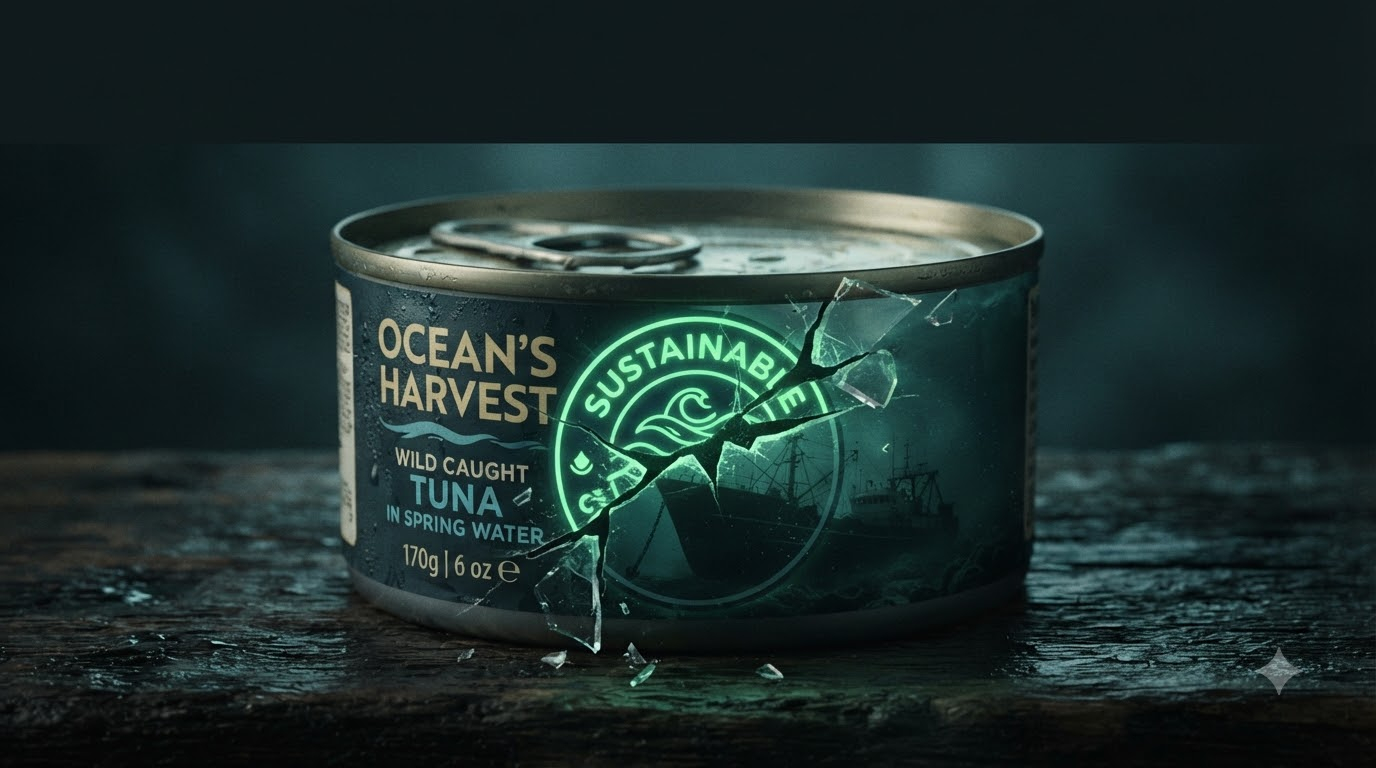
Meta Description: Amazon faces a landmark seafood greenwashing lawsuit over “sustainable” and “wild-caught” labels. Learn what it means for consumers, the environment, and your grocery cart.
Quick Answer: On July 31, 2026, consumers filed a proposed class-action lawsuit against Amazon in Seattle federal court, alleging the retail giant misled shoppers with sustainability labels — including “dolphin safe,” “wild caught,” “responsibly sourced,” and “MSC Certified Sustainable Seafood” — on dozens of tuna, salmon, and other seafood products. Plaintiffs say these claims are unsubstantiated or outright false, and that Amazon failed to provide disclosures necessary to prevent consumer deception.
Introduction: The Label Said “Sustainable.” Was It a Lie?
You’re standing in the seafood aisle — or more likely, scrolling through Amazon’s grocery section at 11 p.m. — and you spot a can of tuna stamped with a glowing blue certification badge. MSC Certified Sustainable Seafood. Maybe there’s a reassuring phrase underneath: Wild Caught. Responsibly Sourced. Dolphin Safe.
You feel good about your choice. You pay a little more than you might have for the generic brand. You tell yourself you’re doing your part.
But what if that label was doing something far more calculated than informing you — what if it was designed to sell to you?
That’s exactly what a new, landmark lawsuit filed against Amazon.com on July 31, 2026, alleges. And the implications stretch far beyond one retailer’s seafood aisle. This case could reshape how every major e-commerce platform markets food products, force a reckoning with the seafood certification industry, and give millions of eco-conscious consumers a new reason to scrutinize what they put in their carts.
In this post, we break down exactly what happened, what the lawsuit argues, what it means for you as a consumer, and — critically — what you can actually do about it.
What Is the Amazon Seafood Greenwashing Lawsuit?
The Core Allegations
In a proposed class-action complaint filed in federal court in Seattle, lead plaintiffs Madeleine Rogow of Los Angeles and Adam Sorkin of Chicago accuse Amazon of false advertising and deceptive marketing practices related to seafood sold on its platform.
The lawsuit targets dozens of tuna, salmon, and other seafood products sold under major brands — including Bumble Bee, Chicken of the Sea, and StarKist — as well as Amazon’s own private label, 365 by Whole Foods Market.
According to the complaint, Amazon markets these products using phrases such as:
- “Dolphin Safe”
- “Responsibly Sourced”
- “Sustainable”
- “Wild Caught”
- “MSC Certified Sustainable Seafood”
The plaintiffs argue these representations are either unsubstantiated or materially false. Why? Because, the complaint states, most fishing vessels are not publicly tracked — and some vessels actively obscure their whereabouts by disabling electronic transponders, the devices that broadcast a ship’s location. If you can’t track a fishing vessel, you can’t verify where it fished, what it caught, or how.
As the complaint puts it: Amazon “markets the greenwashed seafood products using broad sustainability messaging without providing disclosures necessary to prevent consumer deception.”
Who Filed the Lawsuit — and What Do They Want?
The plaintiffs represent a proposed class of U.S. consumers. They allege violations of Washington State’s Consumer Protection Act and are seeking:
- Compensatory damages — money back for what they overpaid
- Punitive damages — financial penalties meant to punish Amazon’s alleged misconduct
- Restitution for all affected consumers across the country
Both plaintiffs stated plainly: had Amazon disclosed the “true sustainable nature” of these products, they would not have bought them — or would have paid significantly less.
Amazon has not yet responded publicly to the allegations.
Why This Lawsuit Is Bigger Than Amazon
The $150 Billion Grocery Machine
To understand why this matters, you need to grasp Amazon’s scale in the grocery market. Amazon is now the second-largest grocery retailer in the United States, with more than $150 billion in gross grocery sales in 2025, according to CEO Andy Jassy on an April 2026 earnings call.
That’s not a niche player. That’s a company that influences what hundreds of millions of people eat — and believe about what they’re eating.
When a retailer of that size puts a “sustainable” badge on a product, it carries enormous weight. It shapes purchasing habits, justifies premium pricing, and — if the lawsuit’s allegations hold — potentially misleads an entire generation of eco-conscious shoppers who are genuinely trying to make better choices.
The Transponder Problem: Why “Wild Caught” Doesn’t Tell the Whole Story
This is the part of the lawsuit that tends to stop people cold when they hear it.
One of the central technical arguments in the complaint is that sustainability claims are fundamentally unverifiable for a large portion of the global fishing fleet. Here’s why:
- Many commercial fishing vessels do not publicly broadcast their location data
- Some vessels go a step further, deliberately disabling their AIS (Automatic Identification System) transponders to hide their activities
- Without tracking, there is no way to confirm that fish were caught in certified, well-managed fisheries — which is the entire premise of labels like “MSC Certified” or “responsibly sourced”
This isn’t a fringe concern. It’s been documented by environmental researchers, journalists, and marine conservation organizations for years. The allegation in the Amazon lawsuit is that the retailer knew — or should have known — about these limitations and chose to plaster feel-good labels on products anyway.
The Problem With “Sustainable” Seafood Certifications
What MSC Certification Actually Means
The Marine Stewardship Council (MSC) blue fish label is the most recognizable seafood sustainability certification in the world. It’s well-intentioned — the MSC genuinely does work to improve fishing practices, and in 2023, it launched a stricter version of its certification standards (Fisheries Standard 3.0), tightening rules on bycatch, shark finning, gear loss, and stock health.
But here’s what many consumers don’t know:
- Already-certified fisheries won’t have to meet these new standards until 2030. That’s a four-year window where products can carry the MSC label under older, less stringent criteria.
- MSC certification fees are paid by the fishing industry itself, raising questions about conflicts of interest in the assessment process.
- A 2023 study published in Frontiers in Sustainability raised concerns about whether sustainable certification’s ability to combat greenwashing is actually trustworthy.
- A June 2026 industry report by Living Oceans Campaign Director Kelly Roebuck warned of “pervasive overreliance” on certifications by retailers, cautioning that using certification as a substitute for genuine supply chain due diligence is leaving companies exposed to exactly this kind of lawsuit.
In short: the MSC label is a tool, not a guarantee. And when retailers like Amazon use it as the entire foundation of a sustainability marketing strategy, without deeper disclosure or verification, the gap between the label and reality can widen.
The Certification Spectrum: What Each Label Actually Signals
| Label | What It Claims | Verification Rigor | Self-Reported? |
|---|---|---|---|
| MSC Certified Sustainable Seafood | Wild-caught, sustainably managed fishery | Third-party audit (but industry-funded) | No |
| “Wild Caught” | Fish caught in open water, not farmed | Minimal — no location verification | Often self-declared |
| “Dolphin Safe” | No dolphins killed in the catch | Some monitoring; gaps in enforcement | Partially self-declared |
| “Responsibly Sourced” | Vague sustainability claim | No universal standard | Yes |
| “Sustainably Sourced” | Vague environmental claim | No universal standard | Yes |
The bottom two rows on that table are what consumer advocates call “self-declarations” — essentially marketing language with no third-party verification requirement. They’re legal to use, and they’re everywhere. And according to the Amazon lawsuit, even the more credentialed-looking labels on the top rows may not be telling the whole story.
What This Means for You as a Consumer
You’ve Probably Been Paying a Green Premium
Here’s something that should make you pause: eco-labeled seafood can cost up to 10% more than non-certified equivalents, according to research cited by Exponent. A 2023 Truven Health Analytics survey found that 51% of Americans are willing to pay more for sustainable seafood — and 80% say seafood sustainability is “important” or “very important” to them.
That’s a lot of people paying a premium for a promise that may not be fully backed up.
The Amazon lawsuit gives legal weight to something many food-system experts have argued for years: when consumers pay extra for “sustainable” products, they’re entitled to real transparency — not marketing language dressed up as environmental commitment.
The Trust Deficit Is Real
From a consumer standpoint, the damage of a lawsuit like this isn’t just financial — it’s psychological. When a company as large and trusted as Amazon is accused of systematically misleading shoppers on something as fundamental as environmental claims, it erodes confidence across the board.
If you can’t trust the sustainability label on Amazon’s seafood, what can you trust? That’s the question this lawsuit implicitly raises — and it’s one that’s going to resonate with a consumer base that’s increasingly skeptical of corporate green claims.
The Broader Pattern: Amazon Isn’t Alone in This
A Growing Wave of Anti-Greenwashing Litigation
The Amazon seafood case is part of a much larger legal and regulatory shift. Around the world, scrutiny of corporate sustainability claims is intensifying:
- France: A lawsuit was filed against retailer Carrefour over MSC-labeled tuna products, invoking France’s Corporate Duty of Vigilance law.
- EU Green Claims Directive: New European Union regulations are tightening restrictions on vague environmental marketing claims across all product categories.
- FTC Green Guides (U.S.): The Federal Trade Commission periodically updates its guidelines on environmental marketing; scrutiny of unsubstantiated “eco-friendly” claims is increasing.
- UK Competition and Markets Authority: Has already cracked down on several major retailers for misleading sustainability claims.
The broader legal landscape is moving toward mandatory, verifiable disclosure — not just feel-good labels. The Amazon lawsuit, if it succeeds, could accelerate that shift dramatically in the U.S. e-commerce space.
What a Precedent-Setting Case Could Look Like
If this class action proceeds to trial or results in a significant settlement, it could:
- Force Amazon to overhaul its seafood marketing — removing or qualifying unverifiable sustainability claims
- Set a legal standard for what counts as adequate disclosure on eco-labels in e-commerce
- Prompt other major retailers (Walmart, Target, Kroger) to proactively audit their own seafood labeling
- Pressure certification bodies like MSC to tighten standards and improve supply chain transparency
- Accelerate federal regulation of sustainability claims in food marketing
This isn’t just a lawsuit about fish. It’s about the legal and ethical limits of environmental marketing at scale.
Pros and Cons: The Sustainability Certification Debate
✅ What Certifications Get Right
- Provide a common framework for comparing fishing practices
- Create market incentives for more sustainable fisheries
- Fund independent auditing of fishing operations
- Give consumers a shortcut for complex supply chain decisions
- Have measurably improved some fishery practices over time
❌ Where They Fall Short
- Industry-funded assessments raise conflict-of-interest concerns
- Tracking gaps mean claims can’t always be independently verified
- Weak enforcement for vessels that obscure location data
- Vague labels like “responsibly sourced” carry no enforceable standard
- Long implementation timelines mean certifications can lag behind actual practice
What Can You Do? A Practical Consumer Guide
You don’t have to wait for a court ruling to make smarter seafood choices. Here’s what genuinely helps:
1. Go Beyond the Badge
Instead of trusting a label at face value, look for full supply chain disclosure — ideally a named fishery, a country of origin, and a vessel name or certification number you can independently verify.
2. Use the Monterey Bay Aquarium Seafood Watch Guide
The Seafood Watch app (from Monterey Bay Aquarium) rates seafood based on independent scientific assessments and is widely regarded as one of the more rigorous consumer guides available. It’s free, and it’s searchable by species, region, and purchase method.
3. Ask Where, Not Just How
“Wild caught” tells you a method. It doesn’t tell you where. The fishing location matters enormously for environmental impact. Pacific-caught albacore tuna has a very different ecological footprint than Atlantic bluefin caught in the same “wild caught” manner.
4. Prioritize Domestic Sources
Seafood caught and processed in the United States is subject to U.S. fishing regulations, which are generally more robust than those in many other parts of the world. Look for USDC Grade A inspection marks and U.S. state of origin labels.
5. Diversify the Species You Buy
Most sustainability pressure falls on a few high-demand species: salmon, tuna, shrimp. Eating a wider range of seafood — including species like mackerel, sardines, mussels, and U.S. farmed clams — spreads demand and reduces pressure on overfished stocks.
FAQ: Amazon Seafood Greenwashing Lawsuit
Q1: What specific products are named in the Amazon greenwashing lawsuit?
The lawsuit targets dozens of tuna, salmon, and other seafood products sold on Amazon under brands including Bumble Bee, Chicken of the Sea, and StarKist, as well as Amazon’s private label, 365 by Whole Foods Market. The parent companies of the named brands are not defendants — only Amazon is named.
Q2: Is Amazon the only company being sued, or are the seafood brands also defendants?
Amazon alone is named as the defendant. The lawsuit specifically targets Amazon’s role as the retailer marketing and selling these products, not the seafood brand manufacturers themselves.
Q3: What does “greenwashing” actually mean in legal terms?
Greenwashing, in a legal consumer protection context, refers to making false or misleading representations about a product’s environmental benefits — representations that influence purchasing decisions and that a reasonable consumer would rely on. In the Amazon case, the allegation is that sustainability labels misled consumers into paying more, or buying products they otherwise wouldn’t have purchased.
Q4: What damages are plaintiffs seeking in this lawsuit?
The plaintiffs are seeking compensatory damages (reimbursement for what they overpaid), punitive damages (financial penalties), and nationwide restitution for consumers, alleging violations of Washington State’s Consumer Protection Act.
Q5: Does MSC certification actually mean seafood is sustainable?
MSC certification represents one of the more rigorous third-party auditing systems available for wild fisheries, and it has driven genuine improvements in some fishing operations. However, critics point out that its certification fees are paid by the industry, some standards won’t be updated until 2030, and the certification cannot fully account for vessels that disable tracking devices. It’s a meaningful signal, but not an absolute guarantee.
Q6: How common is vessel tracking fraud in the seafood industry?
Research cited in the Amazon lawsuit and documented by organizations like Global Fishing Watch confirms that the practice of disabling AIS transponders — effectively going “dark” on the water — is documented across commercial fishing fleets globally. The true scale is difficult to quantify precisely because of the nature of the concealment.
Q7: Could this lawsuit change how Amazon sells food products in the future?
It’s genuinely possible. A successful outcome or significant settlement could compel Amazon to audit and overhaul its seafood marketing disclosures, and a legal precedent could ripple across the entire e-commerce grocery sector.
Q8: What should I do if I bought seafood from Amazon based on sustainability claims?
Monitor the lawsuit’s progress. If it’s certified as a class action, eligible consumers may be able to join the class and potentially receive compensation. You can also contact consumer advocacy organizations or check for updates via news sources covering the case.
Conclusion: The Label Is Not the Thing
Here’s the uncomfortable truth that this lawsuit surfaces: we have built a system in which the appearance of sustainability has become more commercially valuable than sustainability itself. Labels proliferate. Certification schemes multiply. And retailers — including one of the largest grocers on Earth — have discovered that a well-placed badge can command a 10% price premium from shoppers who genuinely care about the ocean.
That’s not a cynical observation. It’s a structural problem with how corporate accountability gets operationalized in a complex global supply chain.
The Amazon seafood greenwashing lawsuit may or may not succeed in court. But regardless of outcome, it does something important: it forces the conversation into the open. It puts a legal framework around questions that environmental advocates have been raising for years. And it tells every eco-conscious shopper something worth knowing — that caring about the planet and getting manipulated by green marketing are not mutually exclusive.
You deserve better than that. And the oceans deserve better than that.
The next time you see a sustainability label — on Amazon, in the supermarket, anywhere — ask the question this lawsuit is asking: Can you actually prove it?
📣 Join the conversation. Did this change how you think about eco-labels? Drop a comment below, share this post with someone who buys “sustainable” seafood, or subscribe to our newsletter for weekly deep-dives on corporate accountability, food systems, and environmental law.
→ Related reads you’ll want to bookmark:
.
Disclaimer: This article is for informational purposes only and does not constitute legal advice. If you believe you were misled by a product’s environmental claims, consult a qualified consumer protection attorney.
Sources: Reuters | Benzinga | SeafoodSource | Exponent – Sustainable Seafood Certifications | Food Unfolded – MSC Certification

