

Meta Description:
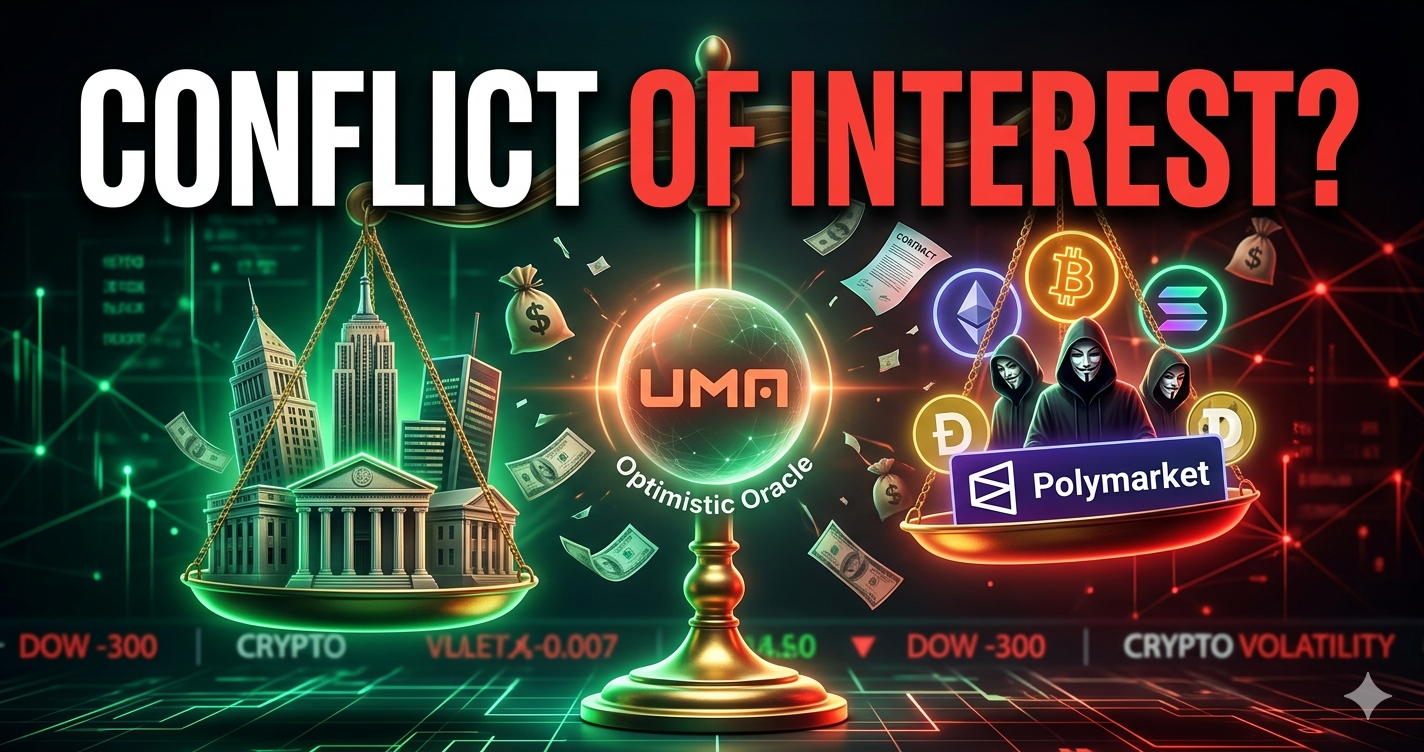
Just now, Dow Jones and The Wall Street Journal are exposing how UMA’s Optimistic Oracle and anonymous crypto arbitrators settle massive Polymarket bets. Discover the conflict of interest risks, dispute resolution drama, and what it means for the future of financial markets today.
Right now, as markets digest fresh volatility, Dow Jones Financial Services headlines are buzzing with a groundbreaking story that bridges traditional Wall Street and the explosive world of decentralized prediction markets. Major outlets under the Dow Jones umbrella—including The Wall Street Journal and Barron’s—have turned their spotlight on the hidden “crypto judges” deciding outcomes worth tens of millions on Polymarket.
This isn’t just niche crypto news. It’s a pivotal moment where Universal Market Access (UMA), its Optimistic Oracle, and real questions about dispute resolution and conflict of interest are hitting mainstream financial consciousness. Traders, investors, and everyday readers are watching closely as billions in perceived market wisdom hang in the balance.
Why Dow Jones Is Covering Polymarket’s Crypto Judges Right Now
Traditional finance has long relied on clear rules, regulators, and established arbiters. But Polymarket, the world’s leading prediction platform, outsources its thorniest resolutions to a decentralized system powered by UMA.
In recent high-profile reports, Dow Jones publications detail how anonymous token holders—often called crypto judges or arbitrators—step in when markets face disputes. These aren’t courtroom judges in robes. They are UMA token holders who vote on real-world event outcomes, from political developments to viral controversies.
The timing couldn’t be more charged. With Polymarket seeing record volumes on everything from elections to cultural events, the stakes have never been higher. One wrong resolution can shift millions of dollars in user payouts, shaking confidence in the entire ecosystem. Dow Jones coverage brings much-needed scrutiny and legitimacy to this evolving space.
Understanding UMA and the Optimistic Oracle: The Backbone of Decentralized Truth
UMA, short for Universal Market Access, is a decentralized oracle protocol designed to bring real-world data on-chain. At its heart lies the Optimistic Oracle, a clever system that assumes proposed outcomes are correct unless challenged.
Here’s how it works in practice on Polymarket: When a market closes, anyone can propose a resolution by posting a bond. If no one disputes it within the challenge window, the outcome stands—fast and efficient. But when a dispute arises, the process escalates to UMA token holders who vote in a decentralized Data Verification Mechanism (DVM).
This “optimistic” design keeps most markets resolving smoothly while reserving heavy arbitration for contentious cases. Former Goldman Sachs traders founded UMA, giving the protocol serious financial pedigree that resonates with Dow Jones readers. Yet its decentralized nature introduces complexities that traditional financial services headlines are now eagerly unpacking.
The Growing Dispute Resolution Crisis on Polymarket
Recent weeks have seen several high-volume Polymarket events spiral into public disputes, drawing sharp commentary in Dow Jones-linked reporting. Traders have watched in frustration as seemingly straightforward questions—about pregnancies, political deals, or public appearances—become battlegrounds.
One notable case involved a $16 million+ market that went through multiple dispute rounds. Another saw a large UMA holder allegedly influencing outcomes on geopolitically sensitive contracts. These incidents highlight the human element in what many hoped would be purely objective systems.
Dispute resolution under UMA rewards correct voters and penalizes wrong ones through bond mechanics. Proposers and disputers risk losing their stakes, while honest voters earn rewards. In theory, economic incentives align everyone toward truth. In practice, concentrated token holdings can tilt voting power, raising eyebrows among both crypto natives and mainstream observers.
Dow Jones coverage captures this tension beautifully—celebrating innovation while questioning whether the system is mature enough for the scale it now commands.
Conflict of Interest Concerns: When Arbitrators Have Skin in the Game
Perhaps the most emotionally charged aspect making waves in Dow Jones Financial Services Headlines is the potential for conflict of interest. Some large UMA holders also maintain significant positions on Polymarket itself. When they vote on disputed outcomes, personal financial gain can theoretically influence decisions.
Critics argue this creates a built-in temptation: a whale holding “No” shares might vote against a “Yes” resolution to protect their bet. Supporters counter that bond penalties and reputational risks deter bad actors, and the transparent on-chain nature allows public scrutiny.
This debate strikes at the heart of decentralized finance’s promise. Can truly neutral crypto judges exist when economic incentives are so direct? Traditional finance has strict rules against such conflicts—insider trading laws, fiduciary duties, and compliance departments. Decentralized systems rely on code, economics, and community vigilance instead.
Many readers feel a mix of excitement and unease. The same mechanism enabling permissionless, global betting also exposes raw power dynamics that Dow Jones reporting is now bringing to light for broader audiences.
How This Intersection Is Reshaping Financial Services
The partnership between Polymarket and Dow Jones itself—integrating real-time prediction data across WSJ, Barron’s, MarketWatch, and more—signals growing acceptance. Prediction markets are moving from the fringes into the financial mainstream, offering crowd-sourced probabilities that complement traditional analysis.
Investors now see Polymarket odds cited alongside analyst forecasts. This fusion creates powerful new signals but also new risks. When oracle disputes make headlines, they don’t just affect crypto traders—they influence sentiment across broader markets.
Financial institutions are watching closely. Some see opportunities in hybrid models that blend decentralized oracles with regulated oversight. Others worry about volatility spilling over. Either way, Dow Jones Financial Services Headlines will continue tracking this evolution as it unfolds.
Key Stats and Takeaways
- Polymarket has hosted markets with over $900 million in disputed volume in recent periods, showcasing the scale of UMA Optimistic Oracle resolutions.
- UMA’s system resolves most proposals optimistically without voting, but disputed cases can involve millions in bonds and payouts.
- Dow Jones publications now feature Polymarket data, bridging prediction markets with traditional financial audiences.
- Large UMA holders can wield significant voting power, sometimes exceeding 20-25% influence in key disputes.
- Conflict of interest debates have intensified following high-profile resolutions involving geopolitics and celebrity events.
- The Optimistic Oracle model reduces costs and speed for everyday markets while providing escalation paths for fairness.
- Prediction platforms like Polymarket processed billions in volume during major election cycles, proving real-world utility.
These figures underscore both the promise and the growing pains of decentralized dispute resolution in finance.
As Dow Jones continues shining a light on these developments, one truth emerges clearly: the line between traditional financial services and decentralized innovation is blurring faster than ever. Traders feel the thrill of new possibilities alongside the anxiety of uncharted risks. Families watching their portfolios wonder if these “crypto judges” will protect or undermine market integrity.
The story is far from over. Whether UMA’s model evolves with stronger safeguards, hybrid oversight, or remains proudly decentralized will shape the next chapter of global finance. For now, millions are glued to their screens—hoping for transparency, fairness, and yes, a little more trust in the systems deciding where their money flows.
Read More
What Is the Current VIX Level Right Now? Markets Hold Breath as Fear Gauge Sits at 18.43
About the Author
Michael Hargrove is a seasoned financial journalist with 15 years covering markets, fintech, and emerging technologies. Previously at major wire services, he now specializes in the intersection of Wall Street and Web3. Michael holds a degree in Economics from NYU and is passionate about making complex financial innovations accessible to everyday investors. Follow him for timely analysis on Dow Jones Financial Services Headlines and beyond.

