


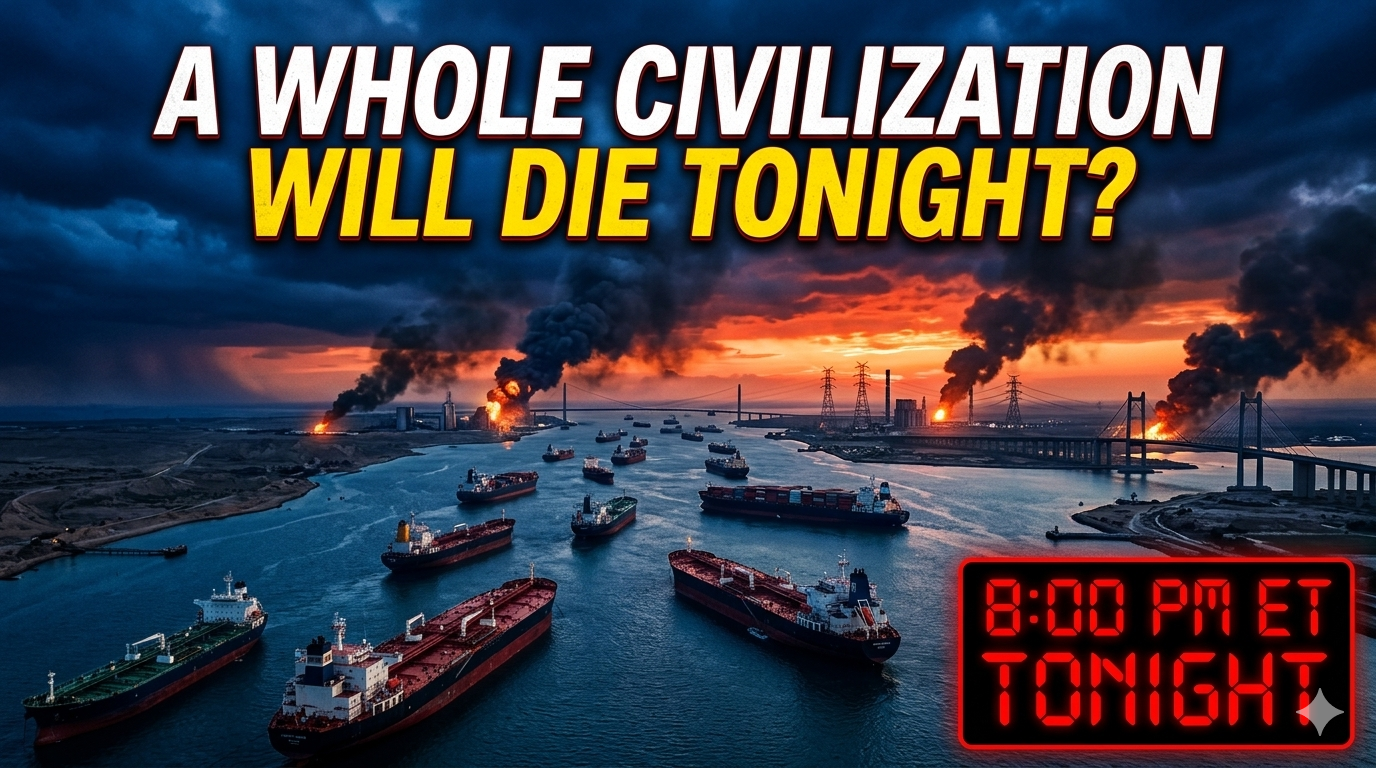
Just now, President Trump declares “a whole civilization will die tonight” unless Iran meets his 8 p.m. ET deadline to reopen the Strait of Hormuz. Latest US Iran news, Trump Iran deadline updates, and what it means for the world amid Iran war fears.
Breaking — Tuesday, April 7, 2026. With only hours remaining until President Donald Trump’s self-imposed 8 p.m. ET deadline, the world is holding its breath. In a fiery Truth Social post released just now, the president warned that “a whole civilization will die tonight, never to be brought back again. I don’t want that to happen, but it probably will.”
The stark message comes as tensions over the Strait of Hormuz travel disruptions reach a boiling point in the ongoing Iran war. Tehran has blocked key shipping lanes vital to 20% of global oil supplies. Families in Iran are preparing for the worst, while markets swing wildly and world leaders scramble for a last-minute deal. This is Iran news unfolding in real time — raw, urgent, and deeply human.
What Exactly Is Trump’s Iran Deadline and Why Is the World Watching?
President Trump’s ultimatum is clear: Iran must fully reopen the Strait of Hormuz and agree to a broader deal by 8 p.m. Eastern Time tonight, or face devastating U.S. strikes on bridges, power plants, and critical infrastructure.
He has called this “Power Plant Day and Bridge Day, all wrapped in one.” The deadline, first floated days ago and now described as final, aims to end what Trump calls “47 years of extortion, corruption, and death.”
For millions of ordinary Iranians, the threat feels terrifyingly personal. Shopkeepers in Tehran are boarding up windows. Parents are keeping children home from school. The fear is palpable — yet so is the defiance. This Trump deadline for Iran isn’t just about oil routes; it’s about the fate of an ancient civilization caught in the crossfire of modern geopolitics.
“A Whole Civilization Will Die Tonight”: The Quote Rocking Global Headlines
The phrase “a whole civilization will die tonight” exploded across social media and BBC World News feeds within minutes of Trump’s post. He added that he hopes for “something revolutionarily wonderful” if regime change occurs, but the tone left little room for comfort.
Critics call it reckless escalation. Supporters see it as tough love to protect global shipping and deter future aggression. Either way, the words have sent shockwaves through US Iran news cycles.
Iranian officials responded swiftly, with the president claiming 14 million citizens — including himself — have volunteered to defend the homeland. Young people are being urged to form human chains around power stations. The emotional weight is heavy: one ancient culture, rich in poetry, history, and resilience, now staring down the possibility of catastrophic damage.
Strait of Hormuz Crisis: How Blocked Shipping Lanes Are Hurting Everyone
The Strait of Hormuz has become the epicenter of this Iran war update. Once a busy artery for tankers carrying oil and liquefied natural gas, the waterway is now largely empty. Iran’s attacks on merchant vessels — 21 confirmed since late February — have forced shipping giants to reroute or halt operations entirely.
Global oil prices have spiked. Families in Europe and Asia are already feeling the pinch at gas pumps. In India and Pakistan, energy shortages loom. Even here in the U.S., the ripple effects could hit household budgets by summer.
Yet the human stories cut deeper. Filipino and Indian seafarers remain stranded on anchored ships, uncertain when they’ll see home again. Iranian fishermen who once worked these waters now watch from the shore, wondering if their livelihoods will survive the night.
Iran’s Defiant Stand: From Ceasefire Rejections to Civilian Mobilization
Tehran has rejected multiple U.S. ceasefire proposals, countering with its own demand for a permanent end to hostilities. Recent U.S. strikes on Kharg Island, bridges, and a train station have only hardened resolve.
State media shows citizens forming protective lines around infrastructure. The message from Iranian leaders is clear: they will not bow to threats. Yet behind the bravado lies anxiety. Hospitals are quietly stocking supplies. Schools are preparing remote learning. The Iranian people — proud, hospitable, and weary of conflict — find themselves once again at the heart of a story written by superpowers.
Key Stats and Takeaways from Today’s Iran Crisis
- The Strait of Hormuz carries roughly 20% of the world’s daily oil supply and significant LNG volumes — disruptions have already slashed tanker traffic to near zero.
- Iran has conducted 21 confirmed attacks on merchant ships since late February, killing or missing at least 12 seafarers.
- U.S. and Israeli strikes since February 2026 have targeted Iranian leadership and infrastructure, escalating into the current Trump Iran deadline standoff.
- Global oil prices have surged amid the blockade, with further spikes expected if strikes hit energy facilities tonight.
- Over 150 merchant vessels are currently anchored outside the strait, waiting for safe passage.
- Iran reports 14 million volunteers ready to defend key sites as the 8 p.m. ET deadline approaches.
As the hours tick down on this pivotal Tuesday in April 2026, one truth stands out: behind every headline about war in Iran and Trump whole civilization warnings are millions of human lives — mothers, fathers, students, and elders — hoping for de-escalation instead of destruction.
Whether tonight brings devastating strikes or a surprise breakthrough remains to be seen. For now, the world watches, prays, and waits. Iran news rarely gets more urgent than this.
Read More
Tigers vs Diamondbacks Tonight: D-Backs Crush Detroit 9-6 – Can Tigers Bounce Back?
About the Author
Michael Hayes is a senior international correspondent with 15 years covering Middle East conflicts, U.S. foreign policy, and global energy crises. Based between Washington and Dubai, he has reported from the front lines of multiple regional flashpoints for leading outlets. Michael specializes in translating complex geopolitics into stories that matter to everyday readers. Follow him for continuing US Iran news and real-time Iran war updates.
FAQ
What is Trump’s deadline for Iran today?
President Trump has set an 8 p.m. ET deadline on April 7, 2026, for Iran to reopen the Strait of Hormuz and agree to a broader deal. If unmet, he warned of major U.S. strikes, stating “a whole civilization will die tonight.”
What does “a whole civilization will die tonight” mean?
This is a direct quote from President Trump’s recent statement. He used the phrase to warn that failure to meet his Trump Iran deadline could lead to devastating damage to Iran’s infrastructure and way of life, potentially changing the country forever.
Is there a war in Iran right now?
Yes, tensions have escalated into active conflict. The Iran war update includes U.S. and allied strikes on Iranian targets, Iranian attacks on merchant ships in the Strait of Hormuz, and growing fears of wider escalation as the Trump deadline approaches.
Why is the Strait of Hormuz so important?
The Strait of Hormuz is a narrow waterway through which about 20% of the world’s oil supply passes. Strait of Hormuz travel disruptions have caused global oil prices to spike and created severe shipping delays, affecting economies worldwide.
What is the latest Iran news as of April 7, 2026?
As of today, President Trump issued a strong warning about “a whole civilization will die tonight” if Iran does not comply with his deadline. Iranian officials have mobilized civilians to protect key sites, while global leaders urge restraint amid the US Iran news crisis.
When is Trump’s deadline for Iran?
The deadline is 8 p.m. Eastern Time tonight, Tuesday, April 7, 2026. Markets, families in Iran, and international observers are closely watching what happens in the coming hours.
How is this affecting ordinary people in Iran?
Many Iranians are preparing for possible strikes — boarding up shops, keeping children home, and forming human chains around power plants and bridges. The situation has created deep anxiety mixed with strong national defiance.
Will oil prices rise because of the Iran crisis?
Yes. The blockade of the Strait of Hormuz and fears of further attacks on energy infrastructure have already pushed global oil prices higher, with more increases expected if the Trump Iran deadline passes without resolution.