


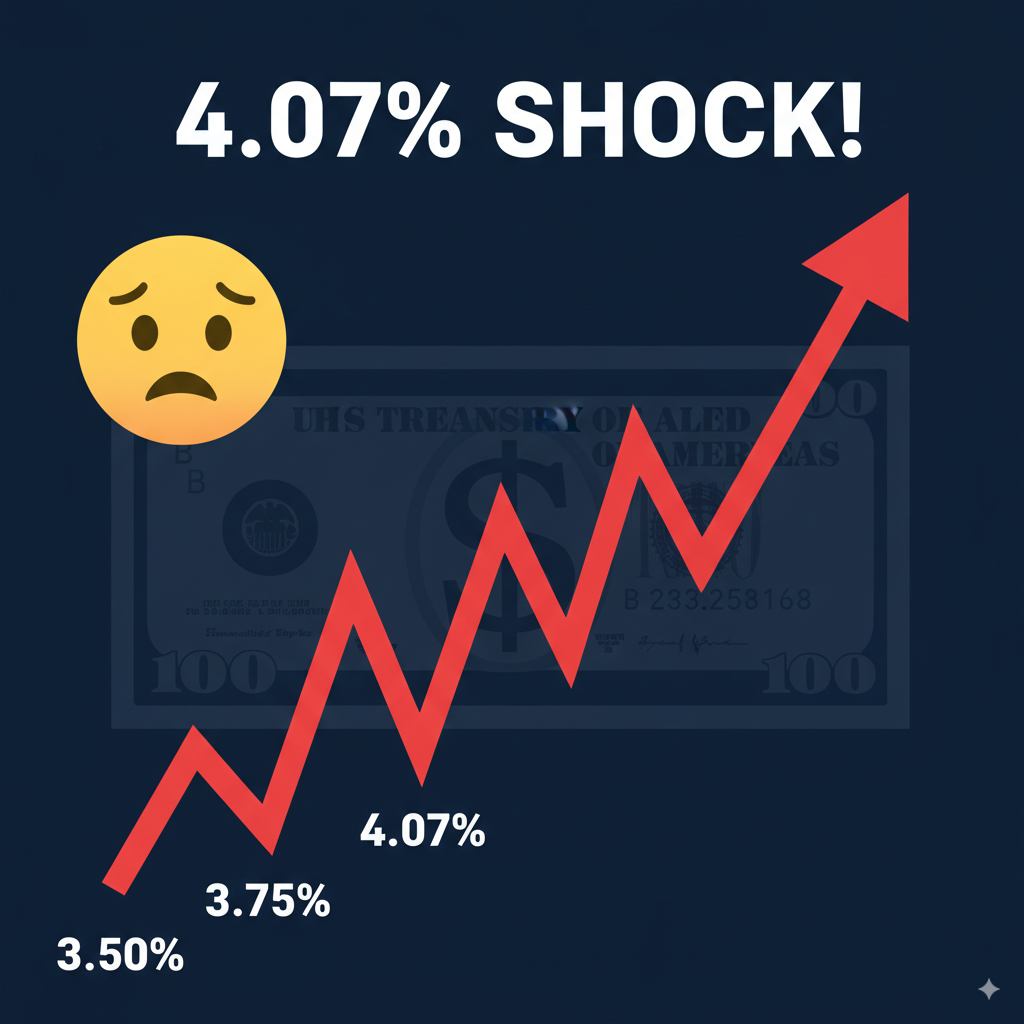
In a stunning twist that’s sending shockwaves through Wall Street, the 10 year treasury yield just spiked to 4.07% today, September 9, 2025. As investors brace for pivotal inflation reports this week, this sudden uptick is igniting fears of a broader economic slowdown. What was a brief respite from recession whispers now feels like a rude awakening—could your retirement portfolio or dream home be next in line? Let’s dive into the chaos unfolding right now.
What Fuels the 10-Year Treasury Yield’s Wild Ride?
The 10 year treasury yield isn’t just a number on a screen; it’s the heartbeat of the U.S. economy, dictating borrowing costs from Washington to your local bank. At its core, this yield represents the return investors demand for lending money to the government via 10-year Treasury notes. When it rises, as it did sharply this morning, it signals shifting investor confidence—often tied to expectations of higher interest rates or persistent inflation.
Short paragraphs like this keep the pulse racing, but the facts hit hard: Yields have been on a rollercoaster in 2025, dipping below 4% last week on soft labor data before rebounding. Today’s climb of 0.03 percentage points might seem minor, but in bond markets, it’s a siren blaring potential trouble. Bond prices fall when yields rise, and with trillions at stake, every basis point counts. For everyday folks, this isn’t abstract—it’s the thread pulling at the fabric of financial stability.
Blame It on the Inflation Boogeyman
Just hours ago, Treasury yields across the board ticked higher as markets digested previews of tomorrow’s core CPI and Thursday’s PPI reports. These inflation gauges could make or break Federal Reserve Chair Jerome Powell’s next moves. If numbers come in hotter than expected, the Fed might hit pause on rate cuts, pushing the 10 year treasury yield even higher. Investors are jittery; after all, August’s CPI surprised to the upside, stoking memories of 2022’s brutal hiking cycle.
The emotional toll? It’s palpable. Families staring at ballooning grocery bills feel the squeeze, while retirees watch fixed-income havens erode. This trend isn’t isolated—global yields are mirroring the U.S., from Europe’s bunds to Japan’s JGBs. Whispers of a “higher for longer” rate environment are growing louder, turning what should be a safe asset into a symbol of uncertainty.
Labor Market Wobbles Add Fuel to the Fire
Don’t forget the jobs report from last Friday—it was weaker than hoped, with private payrolls underwhelming and unemployment ticking up. Initially, that drove yields down to a five-month low of 4.10% on September 5. But today? Reversal city. Traders are betting the Fed will cut rates aggressively if recession signals flash, yet sticky inflation could force their hand otherwise. The 10 year treasury yield‘s flip-flop embodies this tug-of-war, leaving markets on edge.
Picture this: A young couple eyeing their first home, only to see mortgage rates yo-yo. Or a stock trader sweating over tech giants’ borrowing costs. The human stories behind these yields are what make this trend so riveting—and terrifying.
How Does This Spike Hit Your Wallet Hardest?
Mortgages: The Homeownership Dream Slips Away
If you’re in the market for a home, today’s 10 year treasury yield jump is a gut punch. Mortgage rates track this benchmark closely; a 4.07% yield often translates to 30-year fixed rates hovering around 6.5-7%. Just last month, hopeful buyers celebrated a dip below 6%, but now? Affordability is evaporating faster than summer savings.
Emotionally, it’s devastating. Millennials and Gen Z, already burdened by student debt, see their path to stability narrow. A $300,000 loan at 6.5% means $1,900 monthly payments—up $200 from last week’s lows. Experts warn: If yields sustain above 4.1%, housing starts could stall, prolonging the inventory crunch. It’s not just numbers; it’s delayed family milestones and dashed hopes.
Stocks and Savings: Volatility That Keeps You Up at Night
Wall Street isn’t immune. Higher yields lure money from equities to “safer” bonds, pressuring stock valuations—especially growth names like Nvidia or Tesla. The S&P 500 dipped 0.5% in early trading today, with the Nasdaq feeling the brunt. For savers, it’s bittersweet: CDs and money markets might yield more, but eroding bond values hit portfolios hard.
The fear factor? Real. Pension funds and 401(k)s, the lifeblood of American retirement, could see trillions in paper losses if this persists. Yet, there’s a silver lining for the bold: Value stocks and dividend payers might shine. Still, in this emotionally charged climate, many are hunkering down, wondering if the bull market’s roar was just a prelude to a bearish growl.
What Lies Ahead for the 10-Year Treasury Yield?
Peering into the crystal ball, analysts are divided. Optimists point to the Fed’s dovish tilt—markets price in a 75% chance of a September cut—potentially capping yields at 4.2%. Pessimists, however, eye resurgent energy prices and wage pressures, forecasting a climb to 4.5% by year-end. T. Rowe Price strategists even muse on 5% if inflation reaccelerates.
Timely advice: Diversify. Bonds remain a hedge against stocks, but ladder your maturities to weather the storm. For the average investor, this 10 year treasury yield saga underscores a timeless truth—markets reward the prepared. As we await those inflation prints, one thing’s clear: Complacency is the real enemy.
Key Takeaways: Stats That Matter Right Now
- Current Yield: 4.07% as of September 9, 2025, up 0.03% from yesterday’s close—marking the first weekly gain in a month.
- Recent Low: Dipped to 4.10% on September 5 amid weak payrolls, lowest since April, signaling brief recession jitters.
- Historical Context: Below the long-term average of 4.25%, but up from 3.73% a year ago; 2022 peak hit 4.99% during inflation frenzy.
- Mortgage Impact: 30-year rates now ~6.8%, adding ~$150/month to a $400,000 loan compared to August lows.
- Fed Odds: 92% chance of no hike this year; cuts expected to total 50 basis points by December, per CME FedWatch.
Read More
Niners Edge Seahawks in Nail-Biting 17-13 Opener: McCaffrey Delivers!
In the end, today’s 10 year treasury yield surge isn’t just headlines—it’s a wake-up call to safeguard your financial future amid brewing storms. Stay vigilant; the next data drop could rewrite the script.
Author Bio
Alex Rivera is a veteran financial journalist with 15 years covering global markets, interest rates, and economic policy for outlets like Bloomberg and The Wall Street Journal. Based in New York, Alex specializes in demystifying complex trends for everyday investors, drawing from a background in economics from Columbia University.